


Recording
Nov 13, 2025
Design of facilitated dissociation enables timing of cytokine signalling
Paper Author
Adam J. Broerman, David Baker
Department of Chemical Engineering, University of Washington, Seattle, WA, USA
Presented by


Abstract
Protein design has focused on the design of ground states, ensuring that they are sufficiently low energy to be highly populated1. Designing the kinetics and dynamics of a system requires, in addition, the design of excited states that are traversed in transitions from one low-lying state to another2,3. This is a challenging task because such states must be sufficiently strained to be poorly populated, but not so strained that they are not populated at all, and because protein design methods have focused on generating near-ideal structures. Here we describe a general approach for designing systems that use an induced-fit power stroke8 to generate a structurally frustrated9 and strained excited state, allosterically driving protein complex dissociation. X-ray crystallography, double electron–electron resonance spectroscopy and kinetic binding measurements show that incorporating excited states enables the design of effector-induced increases in dissociation rates as high as 5,700-fold. We highlight the power of this approach by designing rapid biosensors, kinetically controlled circuits and cytokine mimics that can be dissociated from their receptors within seconds, enabling dissection of the temporal dynamics of interleukin-2 signalling.
Recording
Research Paper
Previous Talks
46 talks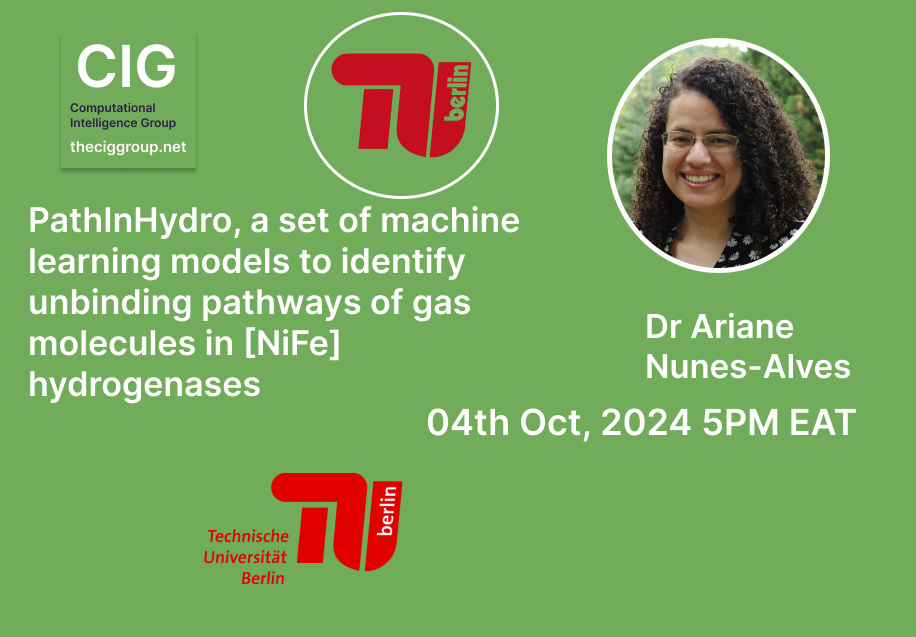
PathInHydro, a Set of Machine Learning Models to Identify Unbinding Pathways of Gas Molecules in [Ni
Oct 04, 2024
Ariane Nunes-Alves
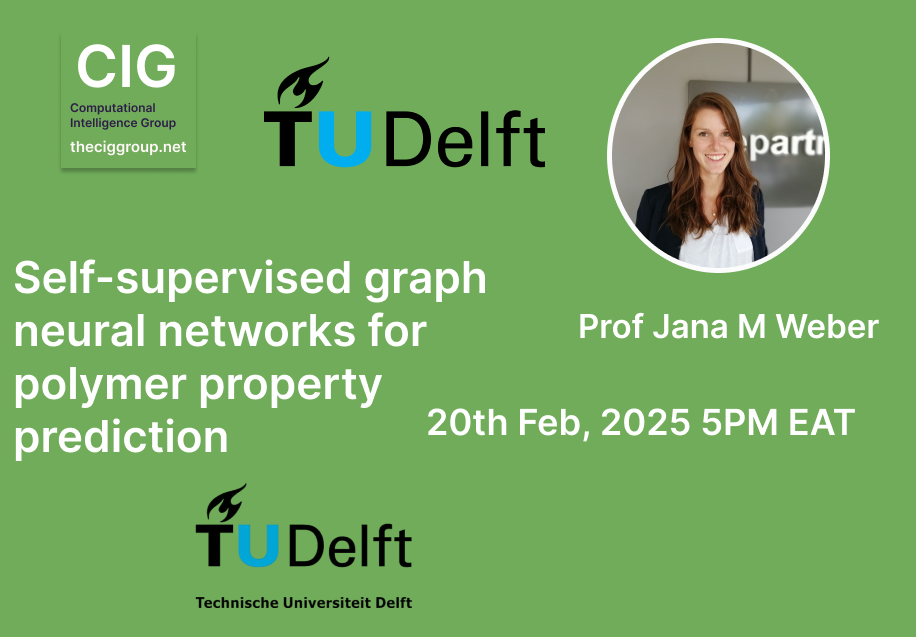
Self-supervised graph neural networks for polymer property prediction
Feb 20, 2025
Jana M. Weber

Learning-Order Autoregressive Models with Application to Molecular Graph Generation
Aug 07, 2025
Michalis K. Titsias