


Recording
Nov 27, 2025
Efficient protein structure generation with sparse denoising models
Paper Author
Michael Jendrusch & Jan O. Korbel
European Molecular Biology Laboratory (EMBL), Genome Biology Unit, Heidelberg, Germany
Presented by


Abstract
Proteins play diverse roles in all domains of life and are extensively harnessed as biomolecules in biotechnology, with applications spanning from fundamental research to biomedicine. Therefore, there is considerable interest in computationally designing proteins with specified properties. Protein structure generative models provide a means to design protein structures in a controllable manner and have been successfully applied to address various protein design tasks. Such models are paired with protein sequence and structure predictors to produce and select protein sequences for experimental testing. However, current protein structure generators face important limitations for proteins with more than 400 amino acids and require retraining for protein design tasks unseen during model training. To address the first issue, we introduce salad, a family of sparse all-atom denoising models for protein structure generation. Our models are smaller and faster than the state of the art and matching or improving design quality, successfully generating structures for protein lengths up to 1,000 amino acids. To address the second issue, we combine salad with structure editing, a sampling strategy for expanding the capability of protein denoising models to unseen tasks. We apply our approach to a variety of challenging protein design tasks, from generating protein scaffolds containing functional protein motifs (motif scaffolding) to designing proteins capable of adopting multiple distinct folds under different conditions (multi-state protein design), demonstrating the flexibility of salad and structure editing.
Recording
Research Paper
Previous Talks
46 talks
PathInHydro, a Set of Machine Learning Models to Identify Unbinding Pathways of Gas Molecules in [Ni
Oct 04, 2024
Ariane Nunes-Alves
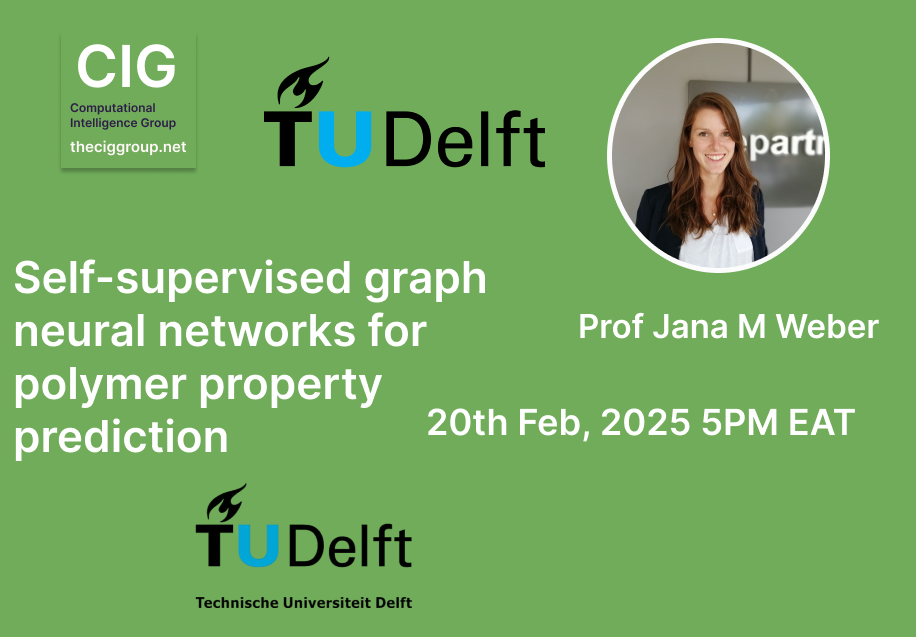
Self-supervised graph neural networks for polymer property prediction
Feb 20, 2025
Jana M. Weber

Learning-Order Autoregressive Models with Application to Molecular Graph Generation
Aug 07, 2025
Michalis K. Titsias